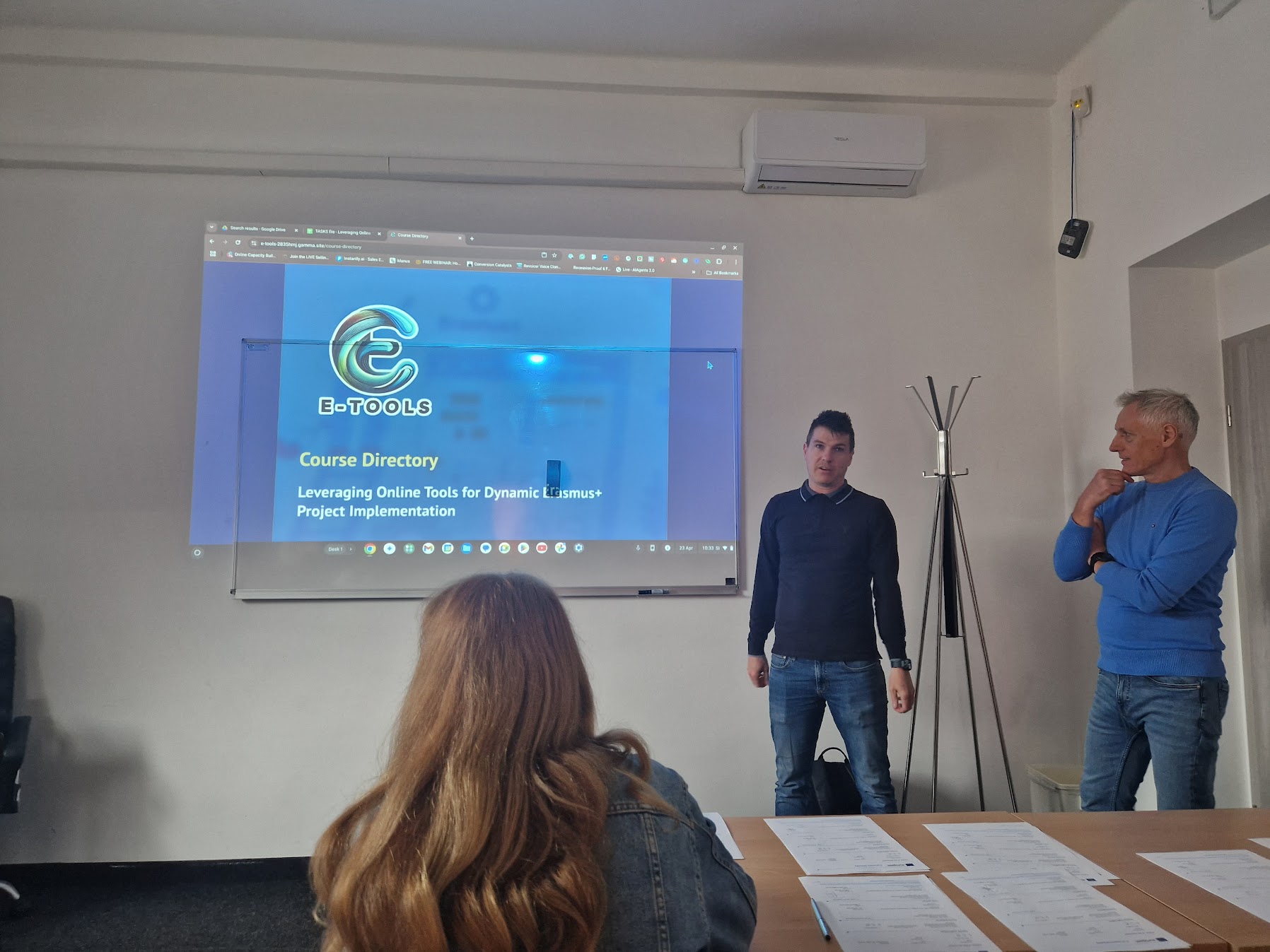
Leveraging Online Tools is a European project that proves that project management does not have to be complicated, expensive, or overwhelming.
Recognised by the National Agency as a Good Practice project for 2025, the initiative was created to support NGOs, schools, trainers, and Erasmus+ coordinators who often struggle with deadlines, reporting, communication, and dissemination in international projects.
The project developed a practical and accessible digital management system based entirely on Google tools, helping organisations coordinate tasks, monitor progress, manage meetings, organise documents, and simplify reporting. What makes the system different is its simplicity — it is free, easy to use, and accessible even for organisations with limited digital experience.
Alongside the management tools, the project created:
an open online educational resource with step-by-step tutorials and video guidance
online capacity-building workshops attended by more than 120 participants across Europe
a specialised training programme on using AI for dissemination campaigns, visuals, and communication strategies
practical templates and resources that can be directly applied in Erasmus+ and other international projects
The impact of the project exceeded the initial expectations. The online resources reached thousands of users; more than 40 organisations began using the management system independently; and the training programme on AI attracted strong interest from educators, trainers, and project managers across Europe.
Beyond the digital tools themselves, the project helped organisations work more efficiently, communicate more clearly, and make their project results more visible and engaging.
The project was implemented by an international partnership bringing together expertise in digital education, project management, dissemination, and adult learning:
ABC Consulting Group – Bulgaria
SMART Institute – Slovenia
Youthfully Yours SK (YYSK) – Slovakia
Leveraging Online Tools shows how simple digital solutions can create real impact — saving time, strengthening cooperation, and helping organisations focus more on people and less on administration.